In brief
- 01The grade describes how the board's bond copes with moisture.
- 02Match the grade to the room, not to the budget line.
- 03Check the standard and grade printed on the board itself.
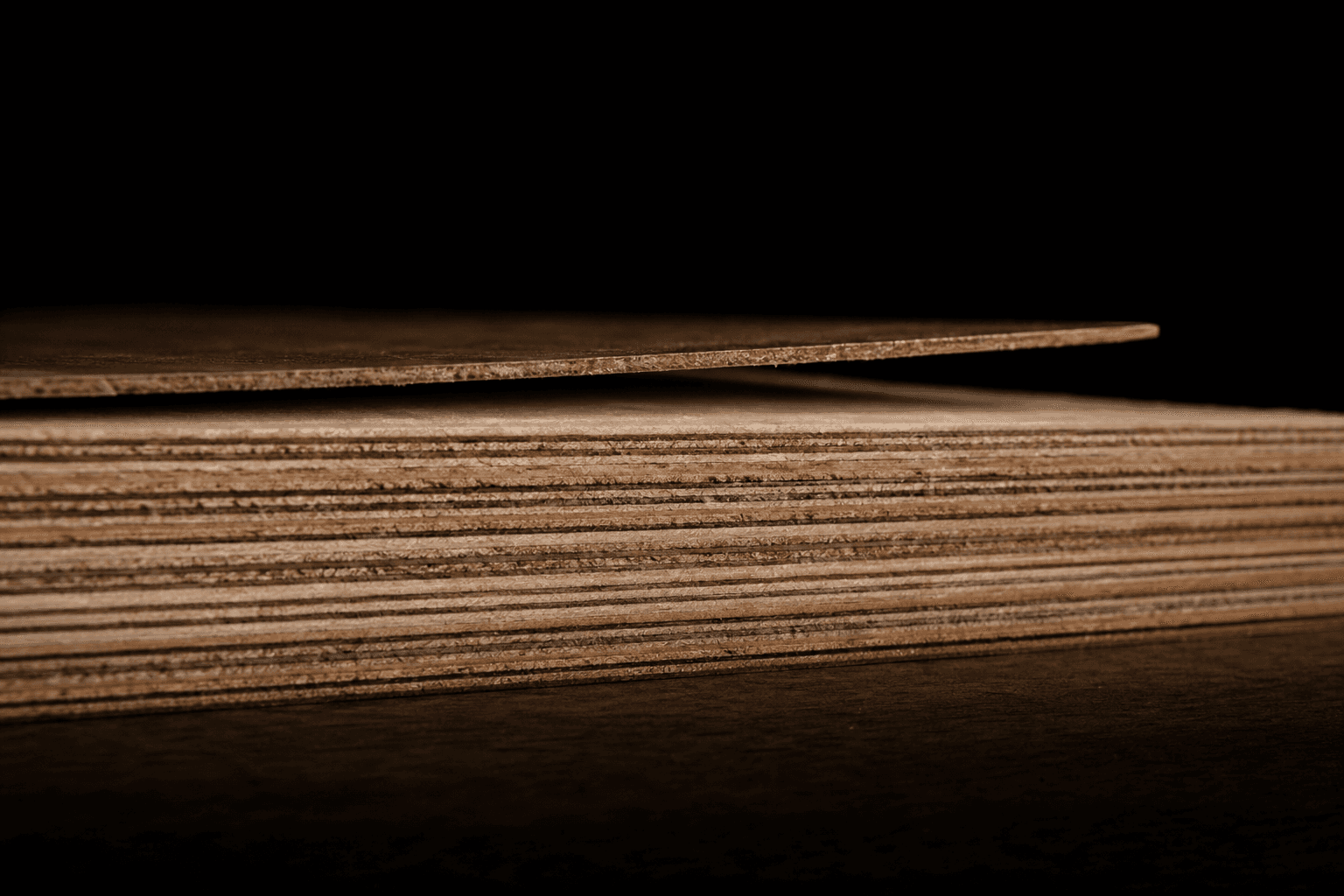
Plywood is the part of a kitchen or wardrobe that nobody sees and everybody depends on. It is made of thin wood layers, each laid at right angles to the one below, then bonded under heat and pressure. That cross-lamination is what keeps a good board flat and strong.
What the grade means
In India, general-purpose plywood is specified to IS 303. Its current edition, IS 303:2024, covers three grades: moisture-resistant (MR), boiling-water-resistant (BWR) and boiling-water-proof (BWP). Marine plywood, made for prolonged exposure to water, is specified to IS 710. The grade is mainly a statement about the adhesive and how well the bond holds when the board gets wet.
Matching grade to room
- Dry interiors such as wardrobes, bedside units and wall panelling: MR is typically enough.
- Kitchens, vanities and anywhere near water: step up to BWR, BWP or marine grade.
- Areas that stay damp or see standing water: ask us before specifying anything.
Beyond the grade
Two boards of the same grade can still behave differently. Flatness, a consistent core without gaps, and good screw-holding at the edges all decide how the finished piece performs. These are the things we check when we grade stock, and the things worth asking any supplier about.