Material education
Know the material before you choose it.
Short, plain-language guides from the people who grade the stock. How it is made, how to choose it, how to live with it. Written by the GM Veneers team.
Glossary of termsGuides
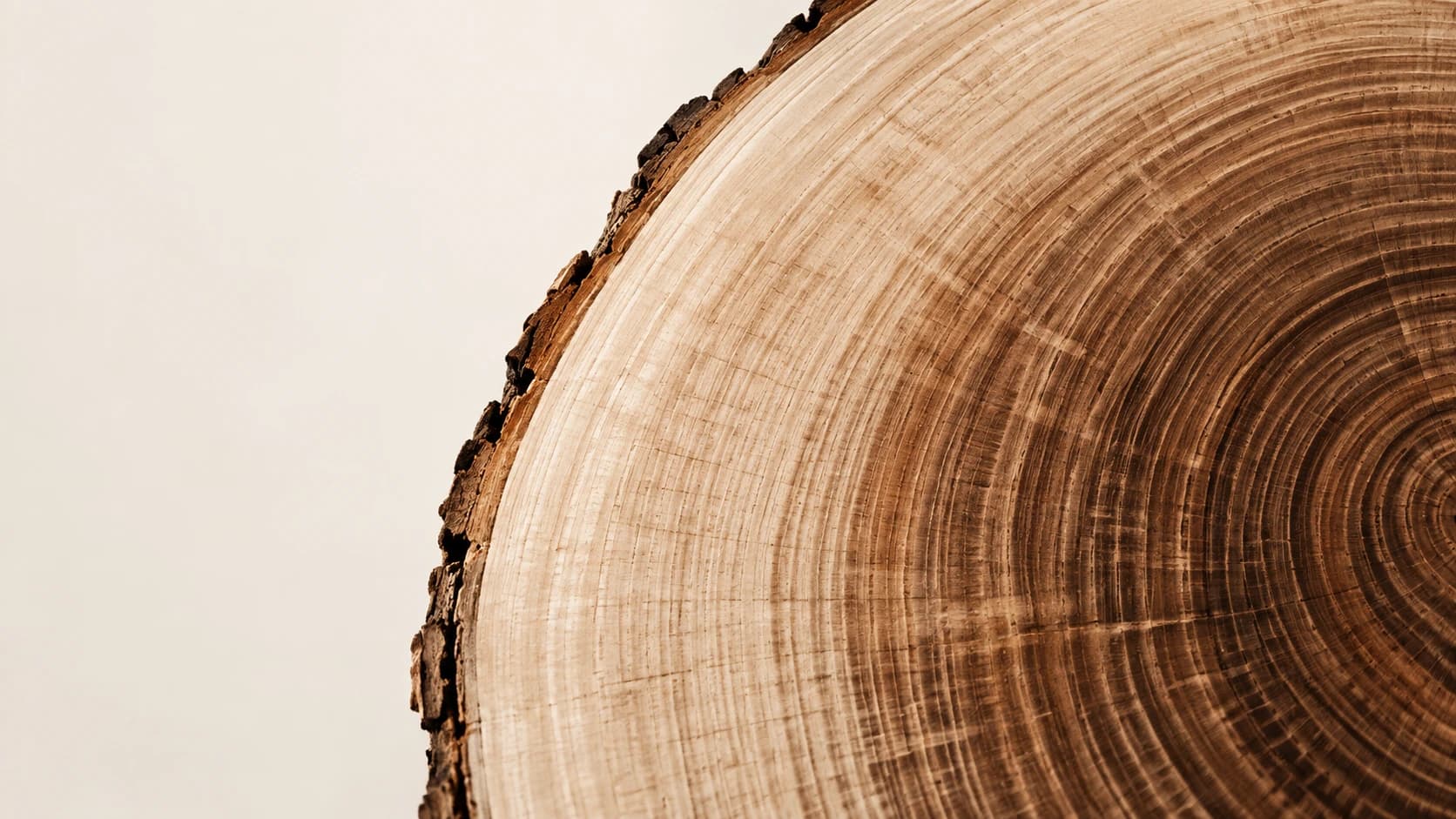 4 min readHow veneer is cut, and why it changes the grainRotary, crown and quarter: the same log can give three very different faces depending on how the blade meets it.Read the guide
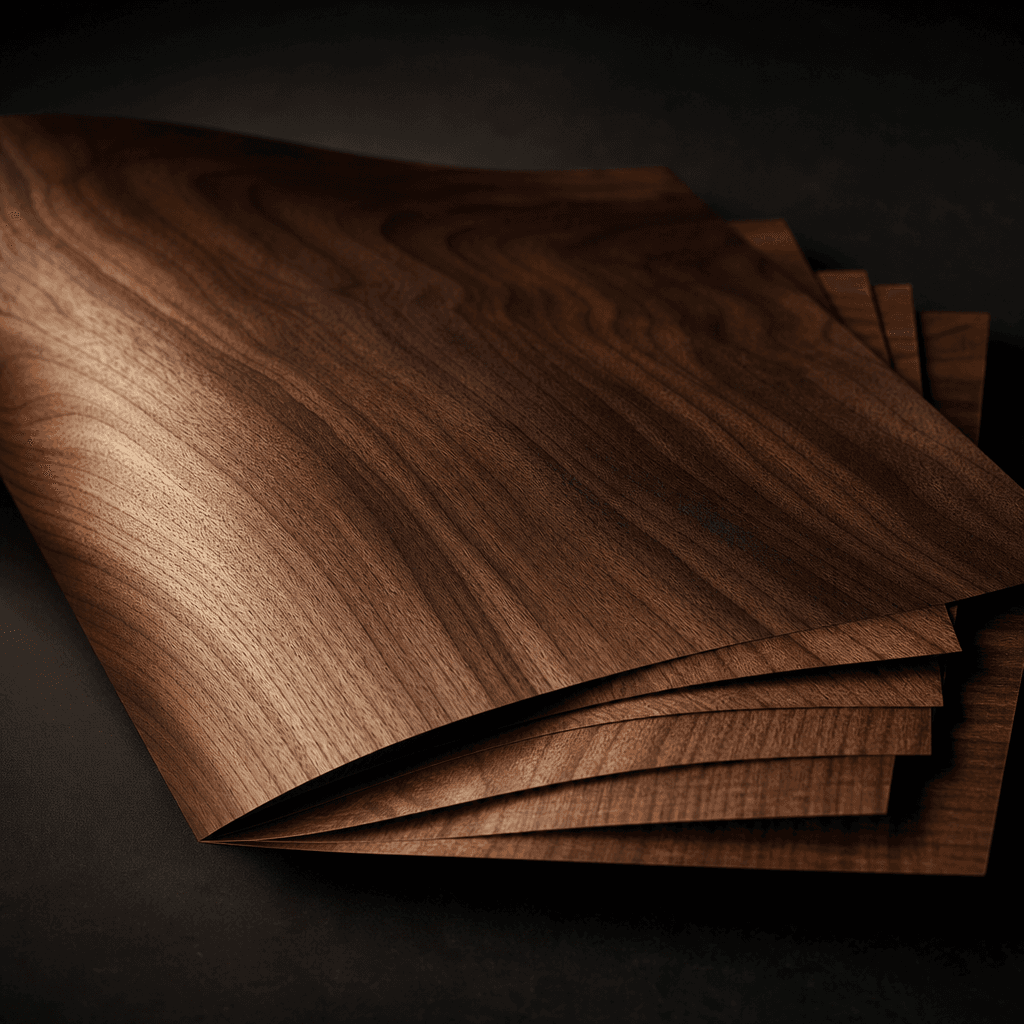 4 min readBook-match or slip-match: laying up a panelTwo ways to arrange consecutive leaves, and what each one does to the grain across a finished wall.Read the guide
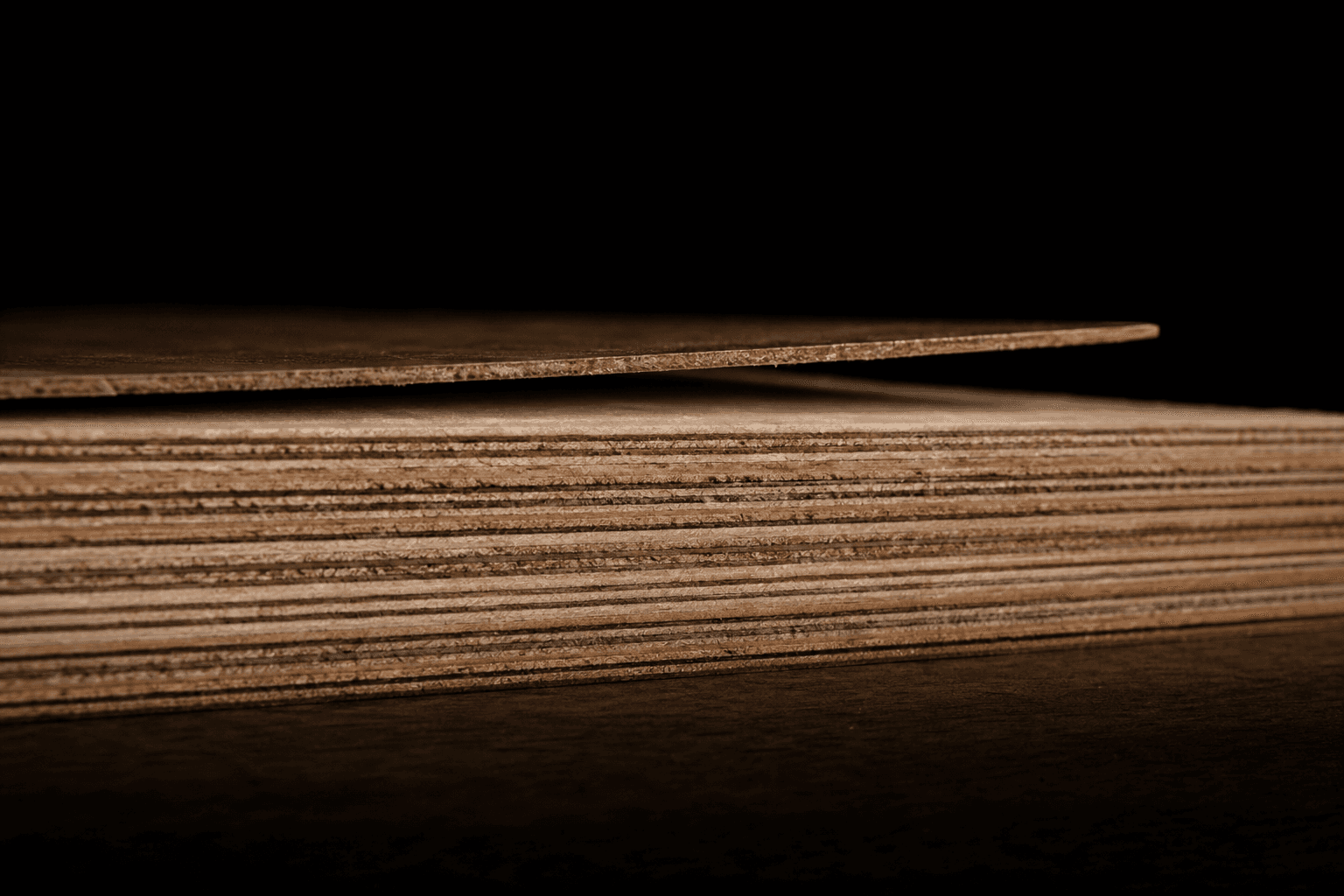 5 min readReading a plywood specificationMR, BWR, marine: what the grade printed on a board tells you, and how to match it to the job.Read the guide
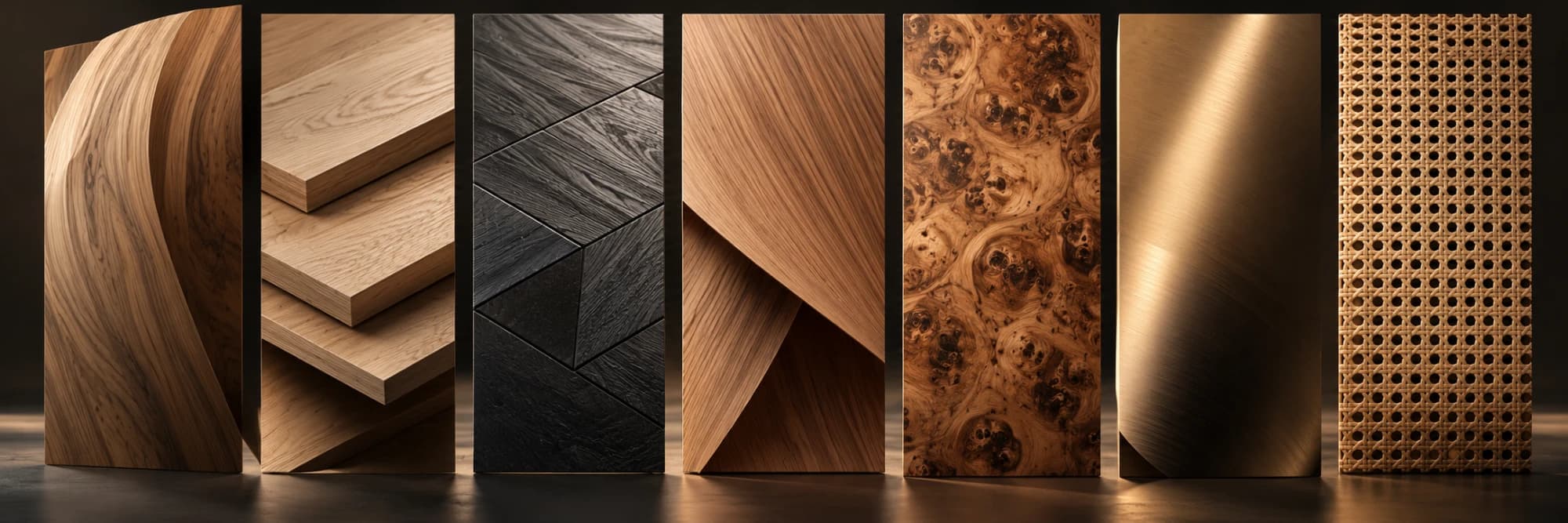 5 min readTypes of wood veneer: natural, dyed, smoked and moreThe main types of wood veneer are natural, reconstituted, dyed, smoked, figured and backed. What each one is, how it is made and where it suits.Read the guide
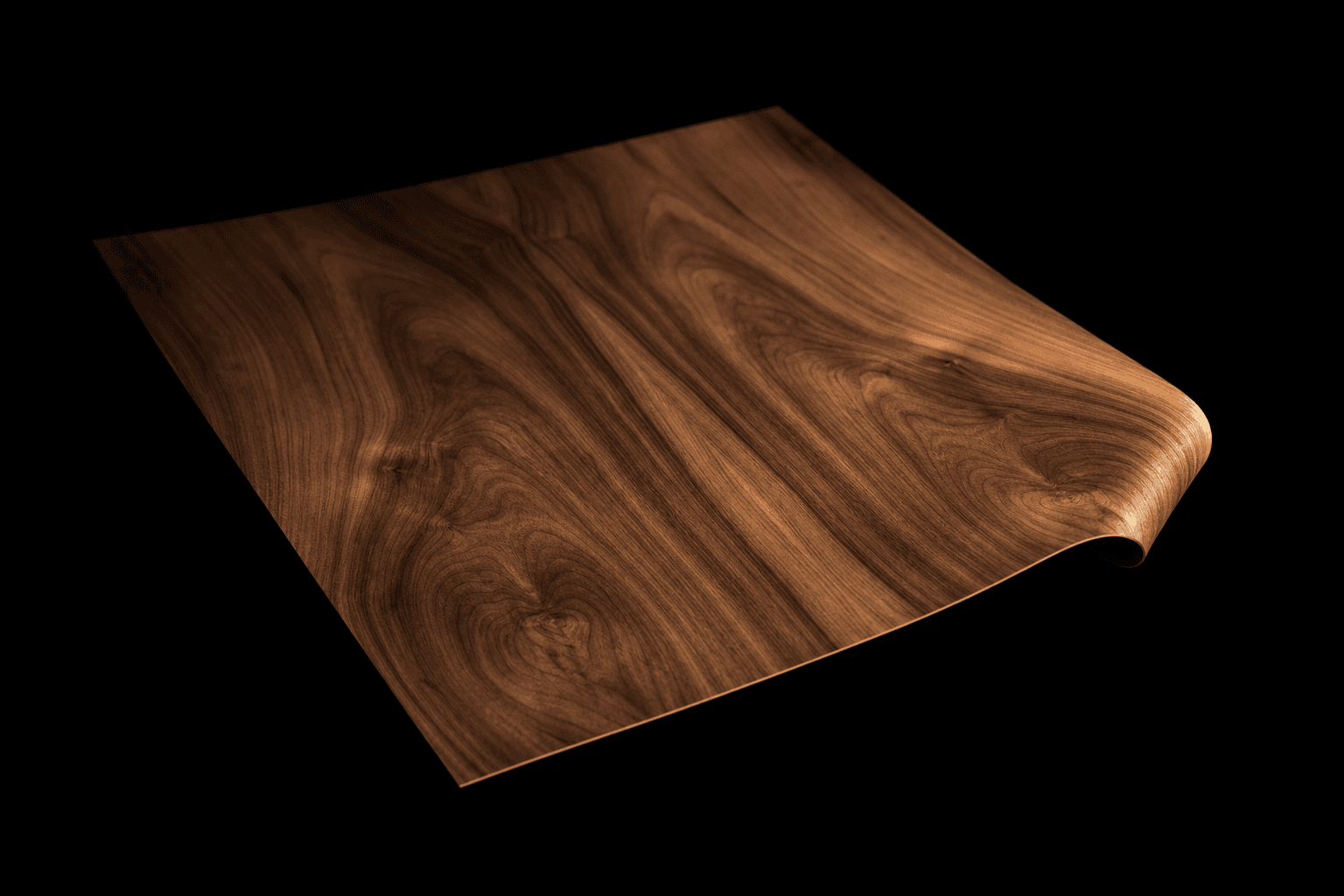 5 min readVeneer thickness: what the numbers meanDecorative face veneer is usually 0.3 to 1 mm thick. What veneer thickness figures mean for sanding, polishing, backing and the panel you buy.Read the guide
- 5 min readLiquid metal coatings: what they are and where they workA liquid metal coating is real metal powder in a binder, applied as a thin coat and then polished or patinated. How it works, the finishes and care.Read the guide
 5 min readFire-retardant plywood: what it does and doesn't doFire-retardant (FR) plywood is treated to resist ignition and slow flame spread, but it is not fireproof. What IS 5509 tests, and where FR ply is used.Read the guide
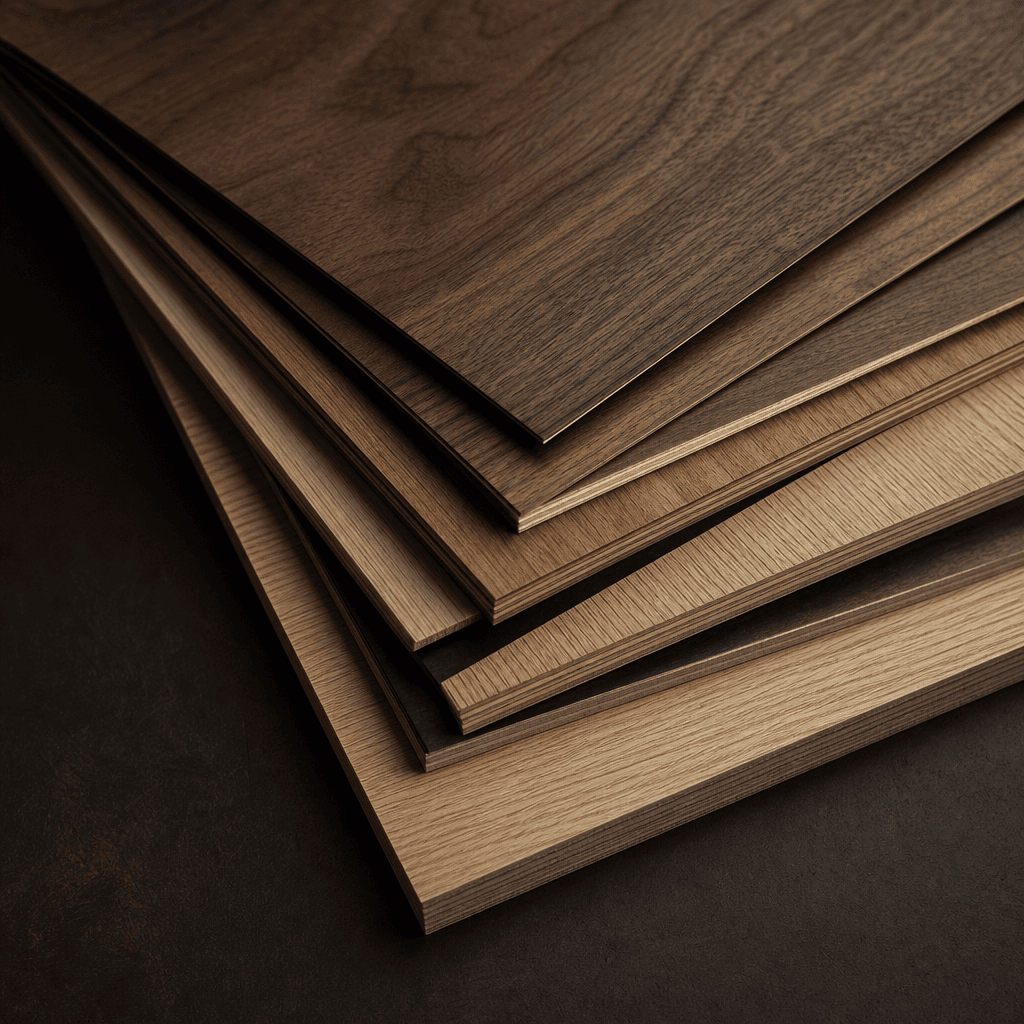 5 min readE0, E1, E2: formaldehyde emission grades for plywoodE0, E1 and E2 are formaldehyde emission classes for plywood and boards. What each means, why the limits vary by standard, and what IS 303:2024 asks for.Read the guide
Species
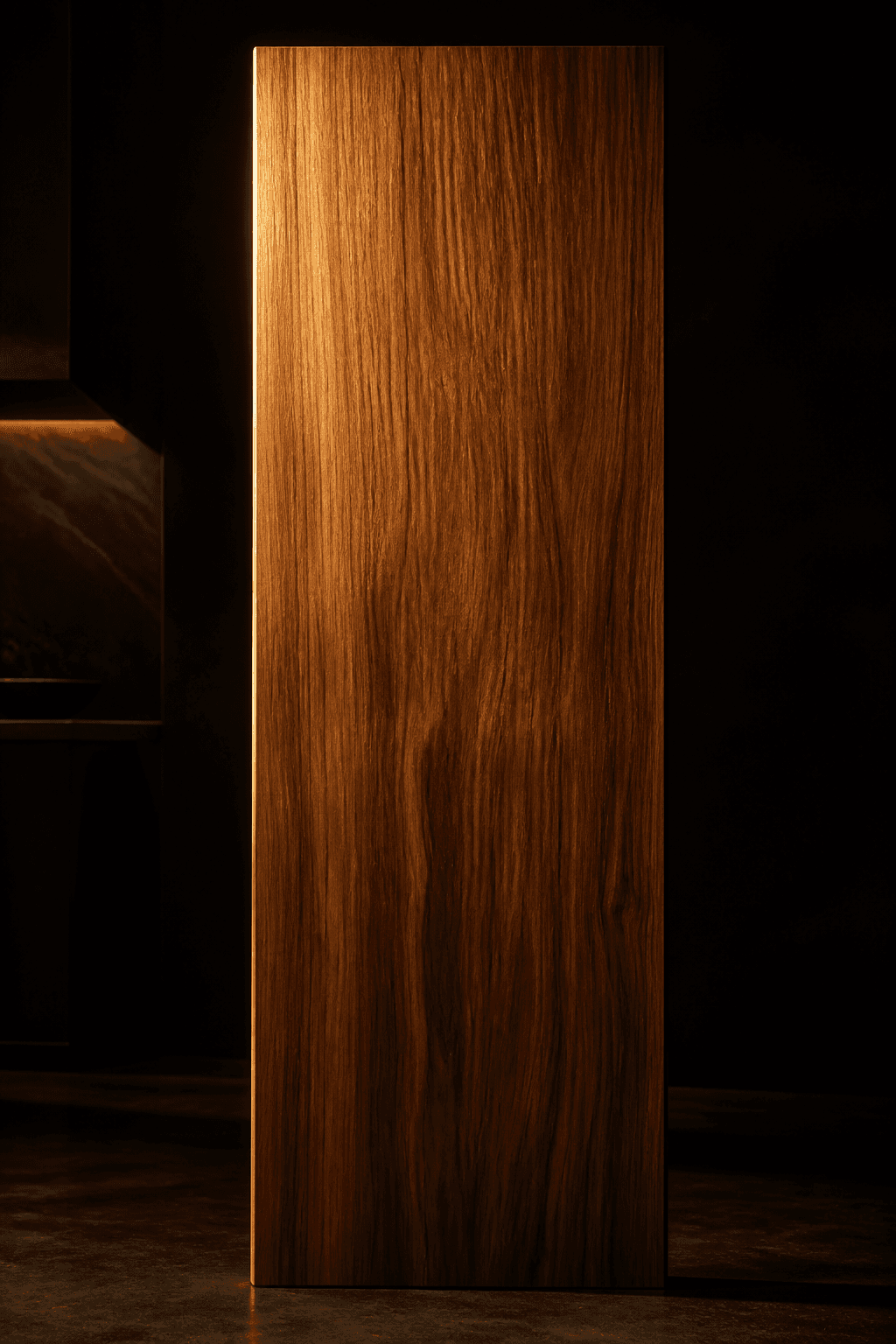 5 min readTeak, walnut and oak: choosing a speciesTone, grain and character of three staple species, and the kind of room each one belongs in.Read the guide
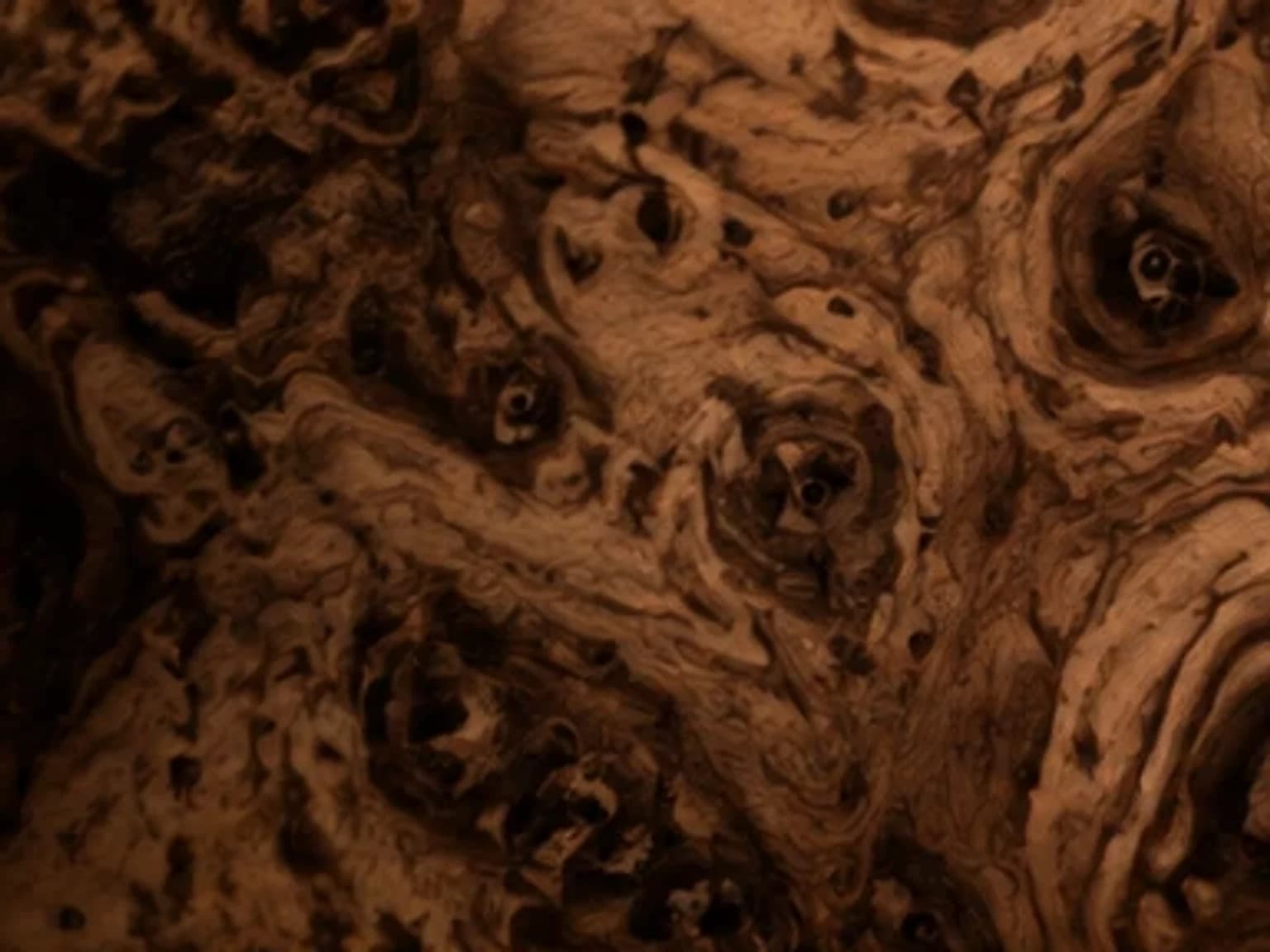 5 min readBurl, crotch and figured veneer: where they suitBurl, crotch and figured veneers are cut from unusual growth in a tree. What each figure is, where it suits, and how to handle and match it.Read the guide
Comparisons
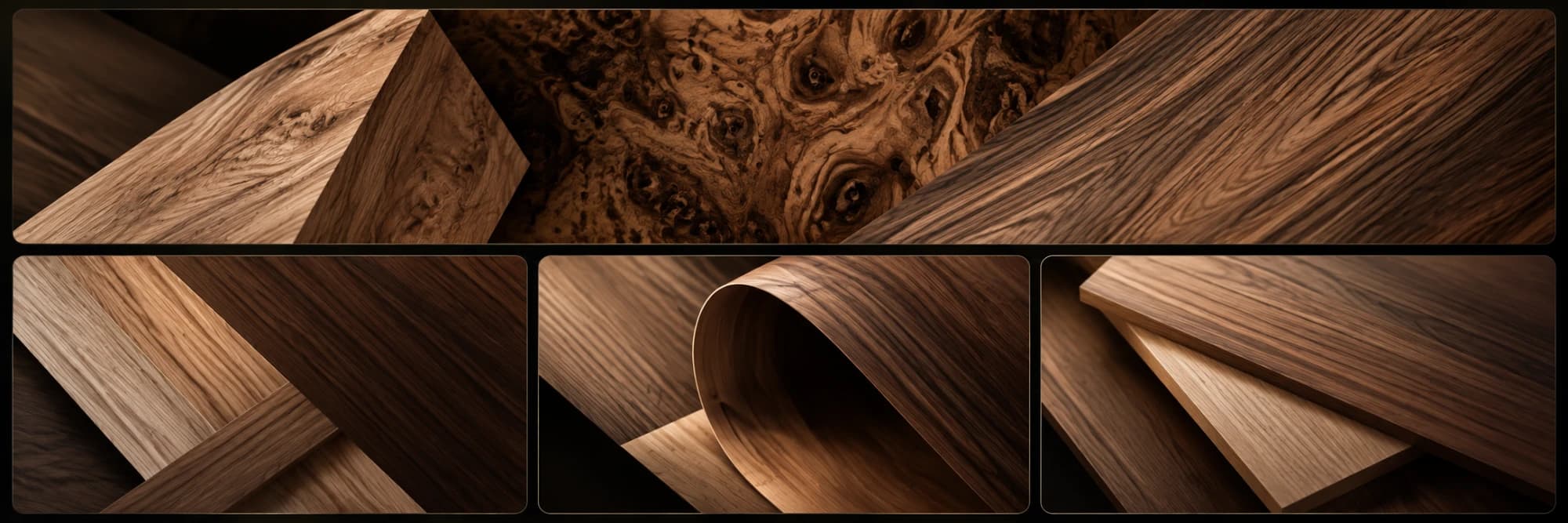 4 min readNatural or reconstructed veneer?Both are real wood. The difference is in how they are made, and it shows up in consistency.Read the guide
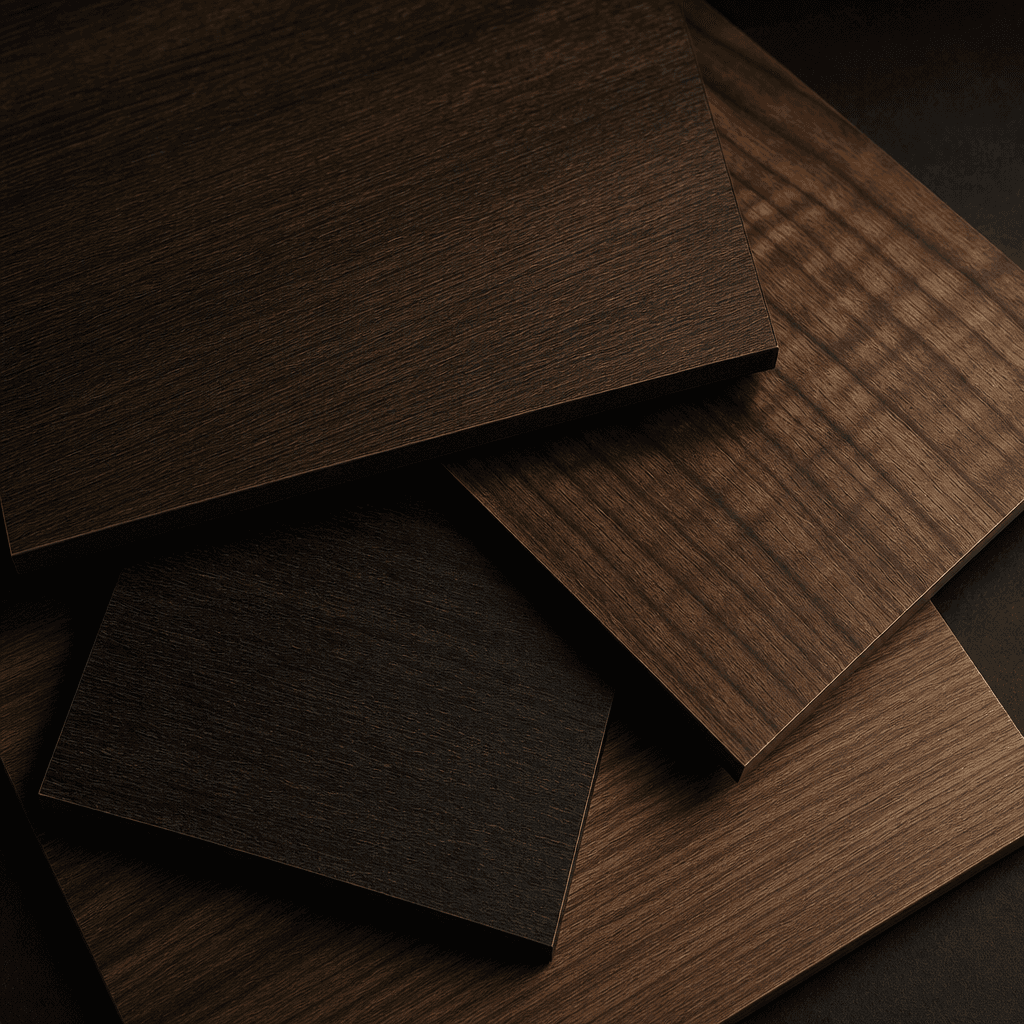 5 min readVeneer, laminate or pre-laminated board?Three ways to finish a surface. Where each one earns its place, and where it does not.Read the guide
 5 min readMR vs BWR vs BWP vs marine plywood: grades explainedMR, BWR, BWP and marine plywood differ in how well the glue bond survives water. What each grade means under IS 303 and IS 710, and where each belongs.Read the guide
- 5 min readLaminate thickness and finishes: 0.8 mm vs 1 mm explained1 mm laminate is stiffer and chips less at edges than 0.8 mm; liners are thinner still. How to choose laminate thickness, finish and post-forming grade.Read the guide
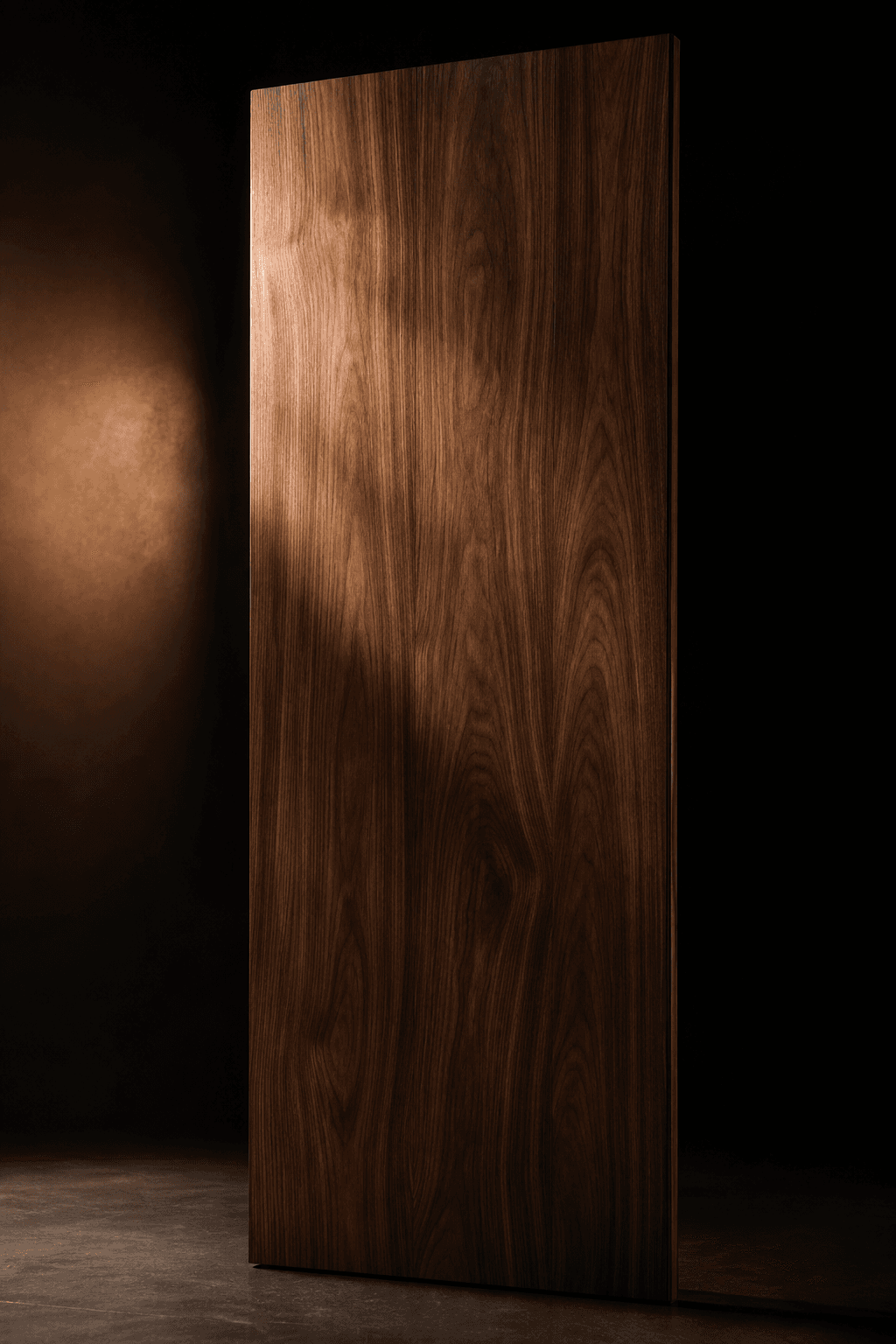 4 min readPU, melamine, lacquer or oil: how to polish veneerPU polish gives veneer the toughest clear film, melamine suits dry rooms, NC lacquer is easy to repair and oil looks most natural. How to choose.Read the guide
Care
 3 min readHow to approve a sample properlyA sample is a promise about the finished room. Five habits that make sure it keeps that promise.Read the guide
- 3 min readCaring for veneer surfacesGentle, everyday habits that keep a veneer surface looking the way it did on the first day.Read the guide
- 4 min readVeneer and plywood in the monsoon: storage and careVeneer and plywood move with humidity. In the monsoon, store sheets flat, dry and off the floor, let them settle, and seal every edge and back.Read the guide
Buying
 4 min readHow many veneer sheets do I need? A simple estimateTo estimate veneer sheets, divide the area by 32 sq ft (one 8 x 4 ft sheet), round up, check the layout, then order matched sets from one batch.Read the guide
- 4 min readBuying veneer and plywood in Pune: a practical checklistBuying veneer and plywood in Pune? Bring drawings and room photos, ask about batch, matching, grade marks and lead time, and see samples in daylight.Read the guide